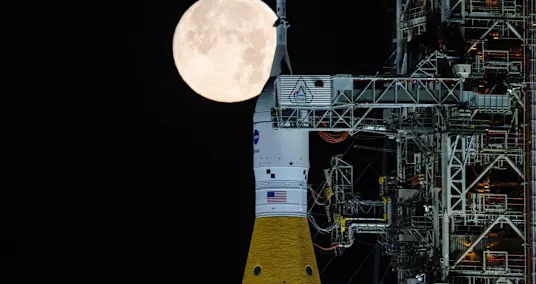
If you’re looking toward the stars next week, there’s a chance you may spot a celestial event.
The Ursid meteor shower, also known as the Ursids, will be the final meteor shower of the year, making it your last shot at seeing “shooting stars” in 2025. It’ll peak Sunday night to Monday morning, and be visible until Dec. 26,
While the Ursids won’t put on as flashy a show as, say, the Geminids, which peaked earlier this month, or the Perseids, the summer meteor shower that many experts say is the best of the year, it might at least provide some holiday cheer to space enthusiasts. Here’s what to know.
What are the Ursids?
Meteor showers occur when debris from comets collide with Earth’s atmosphere and heat up to the point that they briefly glow — creating that “shooting star” effect. The debris from the Ursids specifically comes from the 8P/Tuttle comet, which has been known since 1790, according to Travel and Leisure.
Tuttle doesn’t leave as much debris as other comets, which is why this meteor shower won’t be as active as others.
Who will see the Ursids? How visible will they be?
The Ursids will be visible to most people in the Northern Hemisphere from Sunday, Dec. 21, to Friday, Dec. 26. During its peak (from Sunday night into Monday morning), the American Meteor Society says to expect about five to 10 meteors per hour — though some might see as many as 25.
Sometimes, the moon’s brightness can make it difficult to see meteor showers. However, that won’t be an issue for this year’s Ursids, as there will be a narrow crescent moon during the peak.
What’s the best way to see the Ursids?
Ursids activity is predicted to be highest around 5 a.m. ET on Dec. 22, so stay up late — or get up extra early — to see it.
You don’t need a telescope or any special equipment to view this meteor shower. Seek out a dark area away from city lights and give time for your eyes to adjust.
LATEST POSTS
- 1
 Countdown begins for long-awaited Artemis II moon mission
 - 2Sixteen Kenyans missing in Russia after army recruitment
- 3Florence's Uffizi Gallery moves treasures to safety after cyberattack
- 4Apartment Turned Into Nightmare 'Ice Castle' After Tenant Shut Off Heat Causing Pipes to Burst: VIDEO
- 5Canada Awards C$1.5 Billion Defense Contracts to L3Harris, Airbus


- NASA is shooting for the moon. A guide to the Artemis II mission
- Tire Brands for Senior Drivers: Guaranteeing Security and Solace
- Italian authorities detain civilian rescue ship, German NGO says
- Exploring the Difficulties of Beginning a Family: Individual Experiences
- 'The Housemaid' movie with Sydney Sweeney and Amanda Seyfried premieres this month. What the stars have said about the psychological thriller.
- Rediscovering Experience Through Excursions: Individual Travel Stories
- Italian police hold suspected boss of Naples Mafia's Mazzarella Clan
- Partner of crime boss Steven Lyons arrested in Dubai
- The 25 Most Notable Style Crossroads in History