Since the Iran war began, cryptocurrency flows into the country have surged.
Experts say digital currencies are being used to circumvent sanctions on Iran's Revolutionary Guards and to provide a financial lifeline for civilians battered by soaring inflation.
Cut off from the traditional financial system by decades of international sanctions, Iran has long used crypto as an alternative channel — to sell embargoed oil and discreetly fund allied armed groups such as the Houthi rebels in Yemen, according to US authorities.
And the use of cryptocurrencies has intensified in the current crisis.
In an unusually large movement of more than $10 million (€8.7mn) worth of cryptocurrencies left Iranian exchange platforms between 28 February — the first day of Israeli-US airstrikes — and 2 March, according to data analytics firm Chainalysis.
By 5 March, nearly one-third of these funds had been transferred to foreign exchanges.
While some of this exodus can be explained by citizens rushing to protect their savings, the sheer size of the sums involved suggests the involvement of "regime actors," said Kaitlin Martin of Chainalysis.
Such action would likely occur out of fear of further sanctions or cyberattacks, according to experts.
In June 2025, at the height of the previous Israel-Iran conflict, leading cryptocurrency platform Nobitex had $90mn (€78.1mn) stolen by hackers linked to Israel, according to blockchain company TRM Labs.
Massive crypto inflows to Iran's Revolutionary Guards
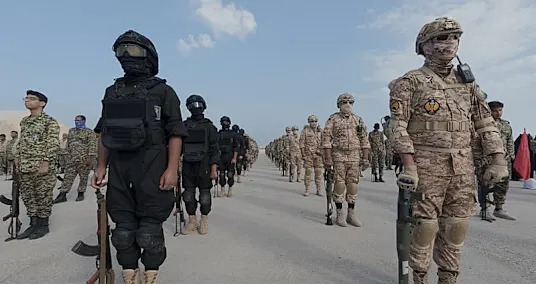
According to Chainalysis, several digital wallets used during this surge in cryptocurrency activity are directly linked to the Revolutionary Guards.
"Even during these internet outages, some outflows are seen, suggesting that some have access to the exchange's cryptoasset holdings even when its website is inaccessible," noted cryptocurrency analysts Elliptic.
The state's grip is massive.
Last year, wallets associated with the Guards were funded with more than $3 billion (€2.6bn) in cryptocurrencies, representing more than half of the country's cryptocurrency flows — a share that continues to grow according to Chainalysis.
Related
The Financial Times earlier this year reported that Iran offered ballistic missiles, drones and other advanced weapons systems for sale using cryptocurrencies.
These digital assets contribute to a veritable "shadow banking," said Craig Timm of the anti-money laundering organisation ACAMS.
Quicker to send and less expensive than a bank transfer, cryptocurrencies are difficult to trace, owing also to loopholes in global regulations, he added.
What crypto is favoured in Iran?
The Revolutionary Guards and the Iranian central bank favour "stablecoins" or digital currencies generally pegged to the dollar, in an attempt to avoid volatility.
But civilians are turning en masse to bitcoin, the world's leading cryptocurrency, which can be withdrawn from platforms and stored in personal wallets, beyond the authorities' reach.
Bitcoin currently trades for more than $68,000.
This strategy was already widely evident during brutally suppressed protests in Iran ahead of the war, according to Chainalysis.
In a country where inflation was already nearing 50% before the conflict started, cryptocurrencies are acting as a "lifeline" for the population in the face of the collapse of the national currency, said analyst Martin.





 Iran denies launching ballistic missiles towards Kurdistan region of Iraq
- 6 Fledgling Cameras for 2024: Ideal for New Photographic artists
- 5 Food varieties to Remember for Your Eating regimen for Ideal Wellbeing
- The most effective method to Begin Your Excursion in Gold Venture
- Expert advice for new stargazers: How to begin your amateur astronomy journey
- Why Cannes Is the Ultimate New Year’s Eve Destination in the South of France’s Off-Season
- Vote in favor of your Favored kind of pasta
- 'The Drama' plot twist, explained: What did Zendaya's character do, and what happens to her wedding?
- The most effective method to Move toward Compensation Conversations for Cutting edge Practice Enrolled Attendants